Pierogi
Origins: Dating back centuries, pierogi are believed to have roots in Eastern European and Asian dumpling traditions, adapted over generations into a distinctly Polish staple.
Traditional method: Hand-rolled dough, hand-folded seams, boiled and often finished in butter.
Regional variation: Fillings vary by region and season—potato and cheese in central Poland, fruit-filled versions in summer, sauerkraut and mushroom for fasting days.
Cultural significance: A dish for every occasion—Wigilia, weddings, and ordinary Tuesdays alike.
Bigos
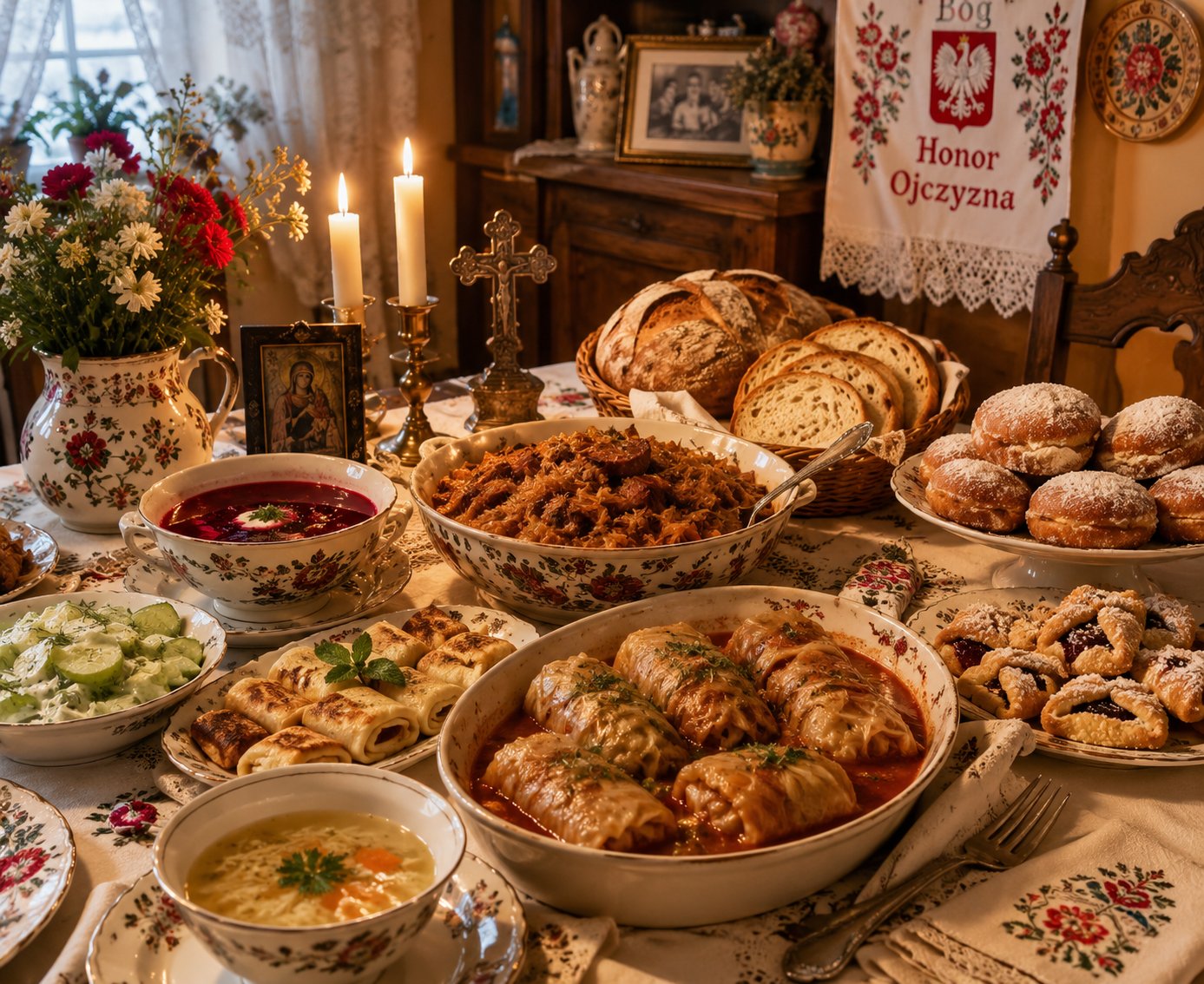
Origins: Often called Poland's national dish, bigos developed as a way to use leftover meats and preserved cabbage through long winters.
Traditional method: Slow-simmered for hours, sometimes days, with flavor deepening each time it's reheated.
Regional variation: Recipes vary widely by household—some lean sweeter with fruit, others smokier with more meat.
Cultural significance: Associated with hunting season and gatherings, bigos is considered a dish that's never quite "finished"—families keep a pot going and add to it.
Barszcz
Origins: A beet-based soup with roots stretching across Eastern Europe, adapted into its own distinct Polish form.
Traditional method: A slow-fermented or simmered beet base, strained to a clear, deep red broth.
Regional variation: Some regions serve it clear, others thicker with vegetables; a white version (żurek) made from fermented rye exists alongside the red.
Cultural significance: Central to Wigilia, often served with uszka, small dumplings shaped like little ears.
Gołąbki
Origins: Stuffed cabbage dishes appear across many Central and Eastern European cuisines; the Polish version carries its own seasoning and tomato-based sauce tradition.
Traditional method: Cabbage leaves are softened, then wrapped around a rice and meat (or vegetarian) filling and simmered in sauce.
Regional variation: Some versions use sauerkraut instead of fresh cabbage for a tangier result.
Cultural significance: A comfort food associated strongly with home cooking and family gatherings rather than restaurants.
Pączki
Origins: Polish pączki trace back to medieval kitchens looking to use up sugar, eggs, and fat before the fasting restrictions of Lent.
Traditional method: An enriched, yeasted dough is deep-fried, then filled with fruit preserves and dusted with powdered sugar.
Regional variation: Fillings vary widely—rose hip jam is a particularly traditional choice in Poland, alongside more familiar fruit preserves.
Cultural significance: Closely tied to Tłusty Czwartek (Fat Thursday), the last big indulgence before Lent begins.
Mizeria
Origins: One of Poland's oldest known dishes, with roots stretching back to the royal court of King Kazimierz the Great in the 14th century.
Traditional method: Cucumbers sliced thin, lightly salted to draw out moisture, then dressed in sour cream and fresh dill.
Regional variation: Some households add a touch of vinegar or sugar to balance the sour cream; others keep it simple with just salt, pepper, and dill.
Cultural significance: The name itself means "misery" in Polish—legend holds it was named for the queen's homesickness, finding comfort in a simple dish from home.
Homemade Noodles (Kluski)
Origins: Egg noodles have been a staple of Polish home cooking for centuries, born out of simple pantry ingredients—flour, eggs, water—stretched into something hearty.
Traditional method: Dough is rolled by hand into thin sheets, lightly dried, then cut into ribbons before cooking.
Regional variation: Width and thickness vary by region and use—thin for soups like rosół, wider and chewier for buttered side dishes.
Cultural significance: A quiet, everyday staple rather than an occasion food—the kind of dish passed down simply because it always has been.
Kołaczki
Origins: Kołaczki descend from kołacz, a round celebratory bread served at Slavic weddings and feasts for centuries; the small filled-cookie version familiar today developed later as a Polish-American adaptation.
Traditional method: A tender cream cheese dough is rolled thin, cut into squares, filled with fruit preserves, and folded before baking.
Regional variation: Fillings differ by household and season—apricot and prune are especially traditional, alongside the more familiar strawberry and raspberry.
Cultural significance: A cornerstone of Polish-American Christmas cookie trays, often made in large batches and shared between neighbors.
Naleśniki
Origins: Thin pancakes appear across many European cuisines, but naleśniki carry their own distinctly Polish identity, especially in how they're filled and served.
Traditional method: A thin batter is cooked quickly in a hot pan, then filled and either rolled or folded into neat parcels.
Regional variation: Sweet versions with farmer's cheese or fruit are common for breakfast or dessert; savory mushroom or meat fillings turn the same crepe into a main course.
Cultural significance: A flexible, everyday dish that moves easily from a quick weekday breakfast to a more elaborate dessert course.
Chleb na Zakwasie (Sourdough Bread)
Origins: Naturally leavened rye and wheat breads have anchored the Polish table for centuries, long before commercial yeast existed—bread made this way wasn't a specialty, it was simply how bread was made.
Traditional method: A live starter, fed and maintained over time, leavens the dough slowly, building flavor through a long, unhurried fermentation.
Regional variation: Rye-heavy loaves are traditional in much of Poland, often darker and denser than the wheat-forward sourdough more familiar in the U.S.
Cultural significance: Bread carries deep symbolic weight in Polish culture—offered to guests with salt as a gesture of welcome, and treated with a respect that borders on reverence; wasting it was traditionally considered close to a sin.
Blueberry Muffins
Origins: Not a traditional Polish recipe—blueberry muffins are an American addition to Wanda's menu, included simply because they've always been a favorite in her own kitchen.
Traditional method: A simple butter-based batter studded with fresh blueberries and a touch of lemon zest, baked until golden.
Regional variation: N/A—this one doesn't have centuries of regional history behind it, just a reliable family recipe.
Cultural significance: A reminder that Wanda's Authentic Polish Kitchen, while rooted in heritage, is still her own kitchen—room is made for the things she simply loves to bake.